
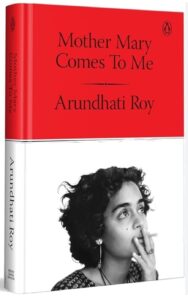
Mother Mary comes to me
“Mother Mary Comes to Me” is a luminous, unflinching memoir that will stir your core—an invitation to reckon with love, grief, and the fierce inheritance of womanhood. Arundhati Roy’s portrait of her mother is both a tribute and a reckoning, and it deserves to be read aloud, argued over, and held close.
A Memoir That Sings and Stings: Why You and Your Book Club Need Mother Mary Comes to Me
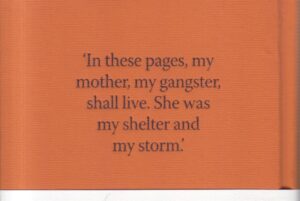
Arundhati Roy’s Mother Mary Comes to Me is not just a memoir—it’s a reckoning, a requiem, and a resurrection. In this deeply personal, grief-soaked narrative, Roy turns her formidable literary gaze inward, tracing the contours of her relationship with her mother, Mary Roy, the firebrand educator and activist who shaped her daughter’s life with both brilliance and brutality. For readers who have admired Roy’s fiction and polemics, this memoir offers something startlingly intimate: a portrait of the artist as a daughter, and of the mother who was both her shelter and her storm.
It’s a story that will provoke passionate discussion, shared memories, and perhaps even tears. It’s also a masterclass in how to write about family without flinching—and without flattening.
The Heart of the Book: A Daughter’s Elegy
The memoir opens in September 2022, the month of Mary Roy’s death, which Arundhati calls “that most excellent month,” as if the Kerala monsoon itself were mourning. From this moment of loss, Roy spirals backward and forward in time, weaving a narrative that is as much about her mother’s life as it is about her own becoming. Mary Roy, best known for her landmark legal battle that secured equal inheritance rights for Syrian Christian women in Kerala, emerges as a towering figure—brilliant, exacting, and often merciless.
Roy does not romanticize her mother. Instead, she renders her in full chiaroscuro: a woman who could be tender and tyrannical, visionary and vindictive. The memoir is filled with moments that are both luminous and lacerating—Mary’s fierce independence, her refusal to conform, her relentless pursuit of excellence, and the emotional toll it took on her children.
And yet, there is love here. Not the soft, sentimental kind, but the kind forged in fire. Roy’s grief is complicated, even shame-tinged, but it is real. “Heart-smashed,” she writes, and we believe her.
Why This Book Matters for Book Clubs
1. It’s a conversation starter about mothers, memory, and myth.
Every reader brings their own mother-story to the table, and Roy’s memoir invites us to examine those stories with fresh eyes. How do we remember our mothers? What do we inherit from them—genetically, emotionally, ideologically? Roy’s portrait of Mary is so specific that it becomes universal.
2. It bridges the personal and the political.
Mary Roy’s legal activism is not a footnote—it’s central to the narrative. This is a memoir that reminds us that the personal is political, and that family histories are often entwined with national ones. Your book club can explore how Roy’s upbringing shaped her later activism, and how Mary’s feminism paved the way for her daughter’s defiance.
3. It’s exquisitely written.
Roy’s prose is lyrical, sharp, and often devastating. She moves between past and present with the ease of a novelist, and her metaphors—like the Kerala rain, the scent of old books, the silence of grief—linger long after the last page. Reading this book aloud in your group will be a gift.
Critical Reflections: Where the Light Flickers
No great book is without its shadows, and Mother Mary Comes to Me is no exception. Here are a few points your group might wrestle with:
– Emotional opacity:
While Roy is unsparing in her descriptions of her mother’s cruelty, she is sometimes elusive about her own emotional responses. Readers may crave more vulnerability, more reflection on how these experiences shaped her inner world. The memoir is powerful, but at times, it withholds.
– Fragmented structure:
The narrative is non-linear, often jumping across decades and locations without warning. While this mirrors the way memory works, some readers may find it disorienting. Book clubs might discuss whether this structure enhances or hinders emotional engagement.
– The mythologizing of Mary Roy:
Despite the memoir’s honesty, there’s a sense that Mary remains slightly out of reach—a mythic figure rather than a fully knowable person. This tension between reverence and resentment is fascinating, but it may leave some readers wanting more grounded detail.
A Mirror and a Map
What makes Mother Mary Comes to Me so compelling is its refusal to offer easy closure. Roy doesn’t resolve her feelings about her mother—she lays them bare. In doing so, she gives us permission to do the same. For anyone who has loved a difficult parent, or struggled to make peace with a complicated legacy, this book is both mirror and map.
It’s also a literary event. Roy’s first memoir joins the ranks of the great mother-daughter narratives—think Maya Angelou’s Mom & Me & Mom, Alison Bechdel’s Are You My Mother?, or Deborah Levy’s Things I Don’t Want to Know. But Roy’s voice is singular: fierce, poetic, and unafraid.
Final Word: Read It Together
If your book club is looking for a read that will spark deep conversation, challenge assumptions, and linger in the heart, Mother Mary Comes to Me is it. Bring tissues. Bring tea. Bring your own stories. And prepare to meet a mother—and a daughter—you won’t soon forget.

Shalimar the Clown
Fiction is the most suitable and convenient vehicle to convey reality! Whoever believes it or not, Salman believes it the most. Through his books, be brings to limelight the most compelling stories that remained hidden in the crevices of history, by the force of his gopher like digging nature!
That a global network of terror can operate for taking personal revenges of lust behind the screen of bombastic claims of freedom fighting can be a main theme only in fiction!
Death is the biggest drama of life! A woman and a weapon are the necessary and sufficient characters for the drama! Here the weapon is a sabatier knife and the woman who inflamed the revenge is Bhoomi!
Bhoomi,whose deliberate detachment from her education was rooted in her erotic self-image that she knew everything she would need, to get men to do whatever she wanted! The other likely victim is India! Not much to guess about where the allegory leads?! The symbol of sovereignty is aiming for 100 percent security but security being a matter of proportions can never be 100 percent!
Salman’s power and depth of perception is evident in the dramatic irony, that the oversexed girl has lost her attraction to her illicit partner- in -lust, the first moment she saw his expression changing from usual silliness to seriousness, and snatches herself away, but the partner, with his flesh burning in lust, pursues for revenge ‘of those who snatched away his love!’ This is another of Salman’s easy to read deeply enthralling mystery, without his eccentric tricks or extensive magical realism, fairly straightforward, though he tries once to mimic the strange style of speaking of Pandit Gopinath!
This is a vast painting of a tale of improbable destiny, with a plot of formidable physical, cultural and economic distances, to link the elitest of Europe to the remotest dancing tribes of Kashmir! Read this to compare and find out how much an author can contribute to understanding of many things that matter, like life, people, world and the Universe!
Shop this book on Amazon: https://amzn.to/47A4FSo
The Hitchhiker’s guide to the galaxy
If questions are inevitable in life, why to struggle with small questions, why not grapple with questions the size of the Universe, a minimum of a few hundred billion light years across on last count and still counting? Why walking across the street and reaching the park in the next roundabout needs to be a dream for the day? Why not jaunt a five hundred thousand light years and relax at the edge of your galaxy? This is the type of thinking this book triggered and a cult of cosmic science fiction got created, but who knew that there are people who believe and put all their billions in the stakes to make it real also?! Space travel, viable electric cars, tunneling and skynet were considered to be fictional just a few years back but now electric cars are the most coveted and the other fictions are becoming true! Thanks to the Elon Musks, Bezos and Bransons!
Only two humans incidentally escape the demolition of Earth and become part of a bunch of aliens who had been grappling to find the answer to the ultimate question but they decide that the ultimate question itself is to be found out first and set up a 7.5 million year long experiment with a computer to decide the question and that particular computer turned out to be Earth which also got demolished by a skyway construction gang just minutes before it was to give the question!
And the question is thus lost forever?! This started as a BBC radio comedy then manifested as records, books , tv series, comics and a movie!Poetry is the ‘ first light-giver’ to the first great works of science, history and even law! Well, the bill fits perfectly for this fiction which has served the same purpose! Reading the book is not a problem, start the first line it will take you to the last, all along taking your breath away by inducing an altered state of consciousness!
The Beekeeper of Aleppo
The winner of 2020 Aspen Word Prize! is written as a personal diary of one of the Syrian refugees, Nuri, on the way to seeking asylum in UK. It narrates in documentary details the troubles and travails that the refugees undergo while fleeing from the civil war ripped Syria. The refugees often flee only when there is no other glimmer of hope anywhere and the guns are pressed on their heads, after having taken a toll of their most precious loved ones.
The saga unfolds with the backdrop of the economic activity that usually happened when there was no civil war. That beekeeping and production of honey and it’s derivatives is such an important mainstay of Syria is refreshing to know, even as it goes up in flames in the civil war madness. Like the spiritual love story of Rumi and Sham of Tabriz, here is a love story of Nuri and his cousin Mustafa, in the economic world of beekeeping.
The story is narrated as an audiovisual art , with vivid and lively imagery of the sights and sounds of the refugees world, the activity is as intensely buzzing as the beehives of the story. It is a sad revelation that the journeys across the unwelcoming borders of countries are only at the mercy of God, the sometimes ferocious nature, and the manipulation of the smugglers and human traffickers.
The smuggled journeys are full of endless waiting and suspense and sudden change of policies and hence destinies. The horrors of child and adolescent abuse, abduction and a suggestion of trafficking for organs are a challenge to humanity. There is the constant presence of Afra, the artist and the blinded by trauma wife of Nuri , as a witness to the numbing terrors of the loss the civil wars inflict. But this scenario has been repeated so many times as a constant refrain.
The author could have ventured out to shed some light on the macro world of refugee generation and the mysterious and strange phenomena associated with it all through and long after the settlement after granting of asylum! Otherwise, the book is a personal diary of one refugee and depicts it’s scenario well! No doubt it is a great lively narrative with images and sounds that capture the sad but buzzing world of refugees vividly.